CranioSacral Therapy for Adults
Life leaves its mark on the body. Not just the obvious things — the injuries, the surgeries, the accidents — but the quieter accumulations too. The years of stress carried in your shoulders. The grief that settled somewhere you can’t quite name. The exhaustion that sleep doesn’t seem to touch. The pain that arrived one day and never fully left.
Most of us learn to compensate. We adjust, push through, and get on with things. And for a while, that works. But over time, the body’s ability to absorb and adapt has limits — and when those limits are reached, it often speaks in the language of pain, tension, sleeplessness, or a persistent sense that something is simply not right.
CranioSacral therapy offers a gentle, deeply restorative way to help your body release what it has been holding — and find its way back to balance.
You don’t have to keep managing. You can actually feel better.
Many adults come to Patricia having lived with their symptoms for years. They’ve tried other treatments, seen specialists, and been told to manage rather than resolve. If that’s where you are, you are not alone — and there may be more that can be done than you’ve been led to believe.
CranioSacral therapy works by using the lightest of touches to listen to the body and gently encourage areas of tension and restriction to release. It supports your nervous system, your natural pain-relief mechanisms, and your body’s own capacity to heal. It is entirely drug-free, works alongside any other treatment you are receiving, and leaves most people feeling profoundly rested.
How CranioSacral therapy can help
Migraines and chronic headaches If you have lived with migraines or persistent headaches for any length of time, you know how much they can take from you — not just in the hours they last, but in the dread of the next one. Tension and restriction in the head, neck and base of the skull are often significant contributing factors. Many people find that regular CranioSacral sessions reduce both the frequency and intensity of their headaches considerably, sometimes after years of finding little relief elsewhere.
TMJ — jaw pain and tension Pain in the jaw, clicking, grinding, difficulty opening your mouth fully — these symptoms are more common than people realise, and more treatable than many are told. The jaw is one of the most complex joints in the body and is deeply connected to the craniosacral system. Gentle, precise work in this area can bring real relief, often more quickly than people expect.
Anxiety and insomnia Anxiety and poor sleep so often go hand in hand — one feeds the other in a cycle that can feel impossible to break. What many people don’t realise is that both have a strong physical dimension: a nervous system that is stuck in a state of low-level alert, unable to properly switch off. CranioSacral therapy works directly with the nervous system, helping it find its way back to the calm, settled state where rest — and real recovery — becomes possible. Many clients notice a difference after just one or two sessions.
Chronic pain and stress When pain has been present for a long time, the body adapts around it in ways that can create new layers of tension and discomfort. Stress compounds this, keeping the body in a state of contraction that makes it harder to heal. CranioSacral therapy works patiently with these layers — not forcing change, but gently inviting the body to let go of what it no longer needs to hold. Many people describe a sense of deep physical relief that they hadn’t realised was possible.
Concussion and post-concussion symptoms The after-effects of concussion — fogginess, headaches, sensitivity to light and sound, difficulty concentrating — can persist long after the initial injury, sometimes for months or years. CranioSacral therapy is increasingly recognised as a valuable support in concussion recovery, helping to restore the natural rhythm and flow of the craniosacral system that a head injury can disrupt.
PTSD and trauma Trauma lives in the body as much as in the mind. Long after the events themselves have passed, the nervous system can remain in a state of protection — vigilant, contracted, exhausted. CranioSacral therapy offers a gentle, non-verbal way to support the body in releasing that held trauma, working at whatever pace feels safe. It does not require you to talk about or revisit your experiences — your body leads, and Patricia follows.
Fatigue and chronic illness For those living with conditions like chronic fatigue, fibromyalgia or multiple sclerosis, the body is working extraordinarily hard just to maintain daily function. CranioSacral therapy is not a cure for these conditions, and Patricia will never suggest otherwise — but many people find it offers real support alongside their existing care, reducing pain, improving sleep, and restoring a sense of ease that chronic illness can quietly take away.
Conception, pregnancy and birth
Patricia has recently completed specialist training in CranioSacral Therapy for conception, pregnancy and birth — an area she is deeply passionate about and one where the potential for gentle, meaningful support is profound.
Supporting conception For those who are trying to conceive, the body and nervous system carry enormous amounts of hope, anxiety and often grief. CranioSacral therapy can help bring the body into a more settled, receptive state — releasing physical tension in the pelvis and abdomen, supporting hormonal balance through nervous system regulation, and creating the conditions in which the body feels safe enough to do what it is trying to do. It works gently alongside fertility treatment or as a standalone support.
Pregnancy Pregnancy brings remarkable changes to the body — and for many women, it also brings real discomfort. Back pain, pelvic pain, difficulty sleeping, and that bone-deep tiredness that rest doesn’t seem to touch are all common. CranioSacral therapy offers gentle relief for all of these, working carefully and safely with the changing body throughout pregnancy. Many women find it one of the most genuinely restorative things they do for themselves during this time.
Birth preparation and recovery In the weeks before birth, CranioSacral therapy can help prepare both the mother’s body and nervous system — releasing tension in the pelvis, supporting optimal positioning, and helping the mother arrive at birth feeling as settled and resourced as possible. After birth, it supports recovery — physical and emotional — for both mother and baby.
What does a session look like?
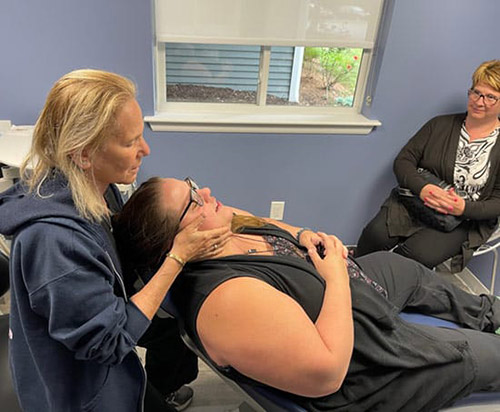
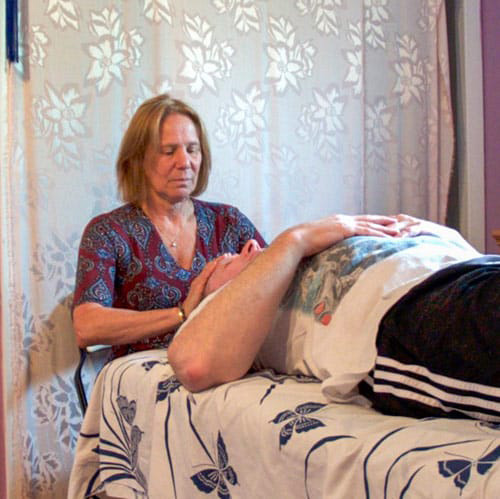
You arrive fully dressed. After a brief conversation about what has brought you — though there is no obligation to share anything you’d rather keep private — Patricia will invite you to lie on the treatment table. She will place her hands very gently on your body, usually beginning at your feet, and from there she simply listens — following the body’s own rhythm and responding to what she finds.
You may talk if you’d like to. You may ask questions. You may also simply close your eyes and be still. This time is entirely yours.
Sessions last approximately one hour. It is not uncommon to feel more tired or more hungry than usual afterwards — this is your body doing the work of integration. Patricia will check in by email a couple of days later, and you are always welcome to reach out with any questions.
How often should I come?
When you are in the midst of symptoms, weekly sessions tend to bring the fastest results. As things improve, sessions naturally become less frequent. Many people choose to continue with periodic maintenance sessions — finding that staying ahead of tension and stress serves them far better than waiting until things become difficult again.
Patricia will discuss what she is finding at each session and work with you to find the rhythm that suits you best. There is no pressure and no fixed programme — just an ongoing conversation about what your body needs.
Happy Notes
Ready to experience
the difference?
If you’ve been managing your symptoms for a long time and you’re wondering whether there’s another way, Patricia would love to talk. Reach out whenever you’re ready — there’s no rush, and no question too small.
or call 1 847 512 7187