CranioSacral Therapy for Tongue Tie: Why It Matters Before and After Release
We are hearing and reading about Ankyloglossia otherwise known as tongue tie everywhere we turn.
What is Ankyloglossia and why should we care?
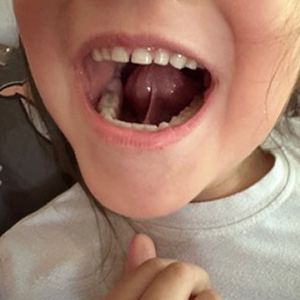
There is a piece of skin under the tongue that is called a frenulum – we all have them.
In the mouth, there is one also under the upper the lower lips and there maybe bones between the cheeks and the gumline – these are called buccal times.
The frenulum under the tongue “dies-out” at roughly 12 weeks in utero 1.
When it fails to do so it creates tension that results in the tongue not having full range of motion.
This can lead to difficulty with any of the functions that we use our tongue for – eating, speaking, swallowing, dental hygiene.
Secondarily, everything that the tongue is attached to may also be affected.
The tongue, often referred to as an organ, is comprised of nine (9) pairs of muscles. Five (5) of those pairs go from tongue to bone. When the tongue is restricted in its range of motion everything that it is attached to will feel this tension. The visual is from Tom Myers’ “front line.” The tension runs from the tongue down to the toes.CranioSacral Therapy can help both pre and post tongue tie release- before the release CranioSacral Therapy will help to calm the baby/child/ adult. Often when there is a tongue tie the person is in a heightened state of fright or flight.2. CranioSacral Therapy has been shown in research to calm.3. In addition, CranioSacral Therapy will help the musculature, tissue, cells and fascia relax making it easier for the release provider to see and release the frenulum.4. After the release, CranioSacral Therapy helps the body to re-set so that it can function optimally.
References:
1 Baxter, R. (2018) Tongue Tied. Alabama Tongue Tie Center. Page 4
2 Berg-Drazin, P. (2016) IBCLC’s and CranioSacral Therapists – Strange Bedfellows or Perfect Match. Clinical Lactation Springer Publishing Company. Pages 92-99
3 Wojcik, M. Siatowski, I. (2023) The effect of cranial techniques on the heart rate variability response to psychological stress test in firefighter cadets. Sci Rep 13, 7780
4 Personal Communication (2021) from Connecticut Pediatric Dentist